
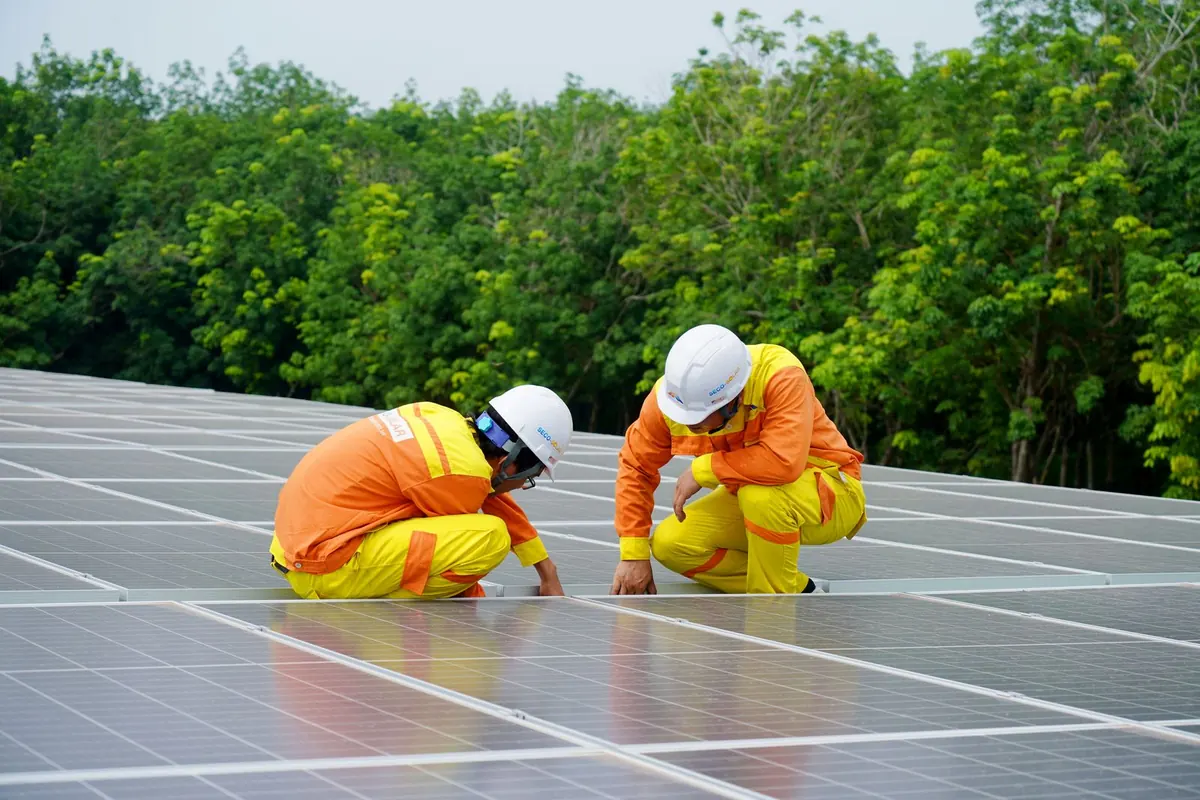
Installing solar panels is the visible part of a solar project. Whether the system delivers its expected value depends just as much on how it is designed and integrated into the site’s electrical system and the grid.
Understand the load first
System sizing starts with how and when the site uses energy. Matching generation to daytime consumption maximises self-consumption and simplifies grid export arrangements.
Site and layout
- Available roof or ground area and its orientation and shading
- Structural capacity for roof-mounted systems
- Cable routes to the point of connection
Point of connection and protection
The PV system connects through inverters into the site distribution system. Engineers check that switchgear, busbars and protection can accept the new source, that protection still coordinates correctly with generation present, and that the system disconnects safely when the grid is lost.
Grid requirements
Utilities set requirements for grid-connected generation, including approvals, metering and protection settings. Planning these early avoids delays between installation and energisation.
Think beyond solar
A renewable strategy can also include wind generation where the site and resource allow. Either way, renewable generation is an electrical engineering project as much as an energy one.