
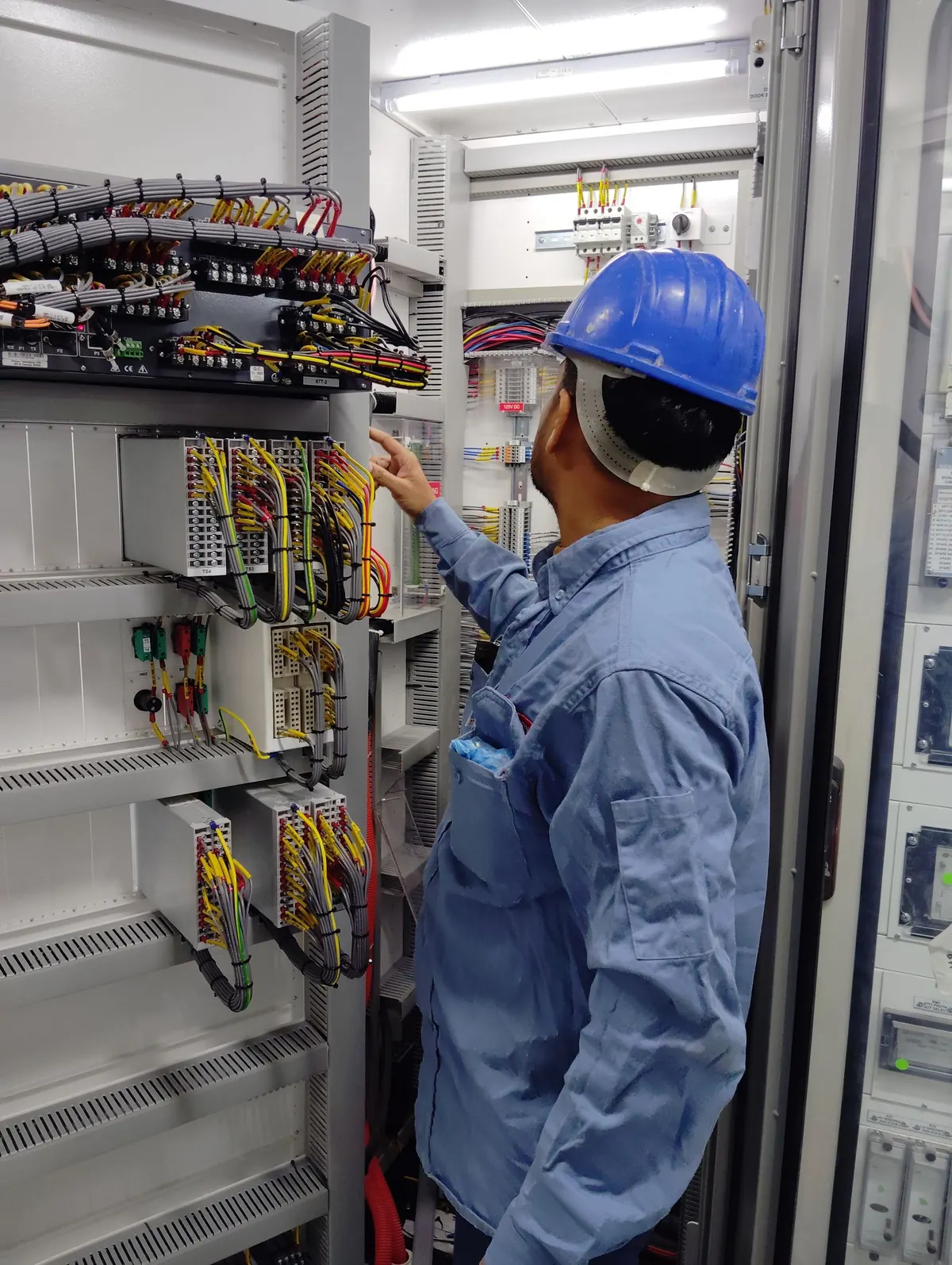
Conventional electronic and relay-based controls can run for decades, but eventually spares become scarce, diagnostics are limited and every change takes longer. Migrating to a PLC or distributed control system (DCS) solves these problems — if it is planned around production rather than against it.
Start with the documentation you actually have
Legacy drawings are often out of date. A field survey that verifies wiring, instruments and interlocks against the drawings is the foundation of a safe migration. The result should be current wiring diagrams and loop diagrams for every signal being moved.
PLC or DCS?
- PLCs suit discrete and machine control, packaged equipment and smaller process units.
- DCS platforms suit continuous processes with many loops, centralised operation and tightly integrated alarm management.
- Many plants use both, integrated into a single operator environment.
Design the control philosophy first
Before configuration starts, define how the plant should be controlled: sequences, interlocks, alarm priorities and operator interactions. Logic and ladder diagrams that reflect this philosophy make the new system easier to commission and maintain.
Phase the cut-over
- Group signals by process area or unit so each can be migrated in a planned shutdown window.
- Use temporary parallel operation or hot cut-over where the process allows.
- Prepare and test configuration offline before each window.
- Keep a rollback plan for every step.
Finish with complete documentation
The migration is only finished when control panel layouts, control room designs, loop diagrams and logic documentation match what is installed. That documentation is what keeps the new system maintainable for the next decade.